
Gold leverage means using derivatives, margin, or leveraged funds to control a larger gold position than your cash alone would allow. The one line that matters most: these tools work best for short-term tactical trades and hedges, not for buy-and-hold investing.
Before you touch a leveraged gold product, know three things:
- Most leveraged gold funds reset daily, so returns compound rather than scale in a straight line.
- A 2x fund can lose money even in flat or choppy markets because of that daily reset.
- Some leveraged ETNs have lower trading volumes, so entering and exiting positions may be less efficient than with standard gold ETFs.
Key Takeaways
Gold leverage magnifies both gains and losses through daily-reset derivatives, making these tools suited to short-term trades rather than long-term holding.
| Point | Details |
|---|---|
| Daily reset drives compounding | Multi-day returns on 2x funds diverge from the simple daily target because of volatility drag. |
| Four main U.S. tickers | UGL, DGP, GLL, and DZZ cover 2x long and short gold exposure; 3x products were delisted. |
| ETF vs. ETN matters | ETNs like DGP and DZZ carry issuer credit risk that ETFs like UGL and GLL do not. |
| Risk rules come first | Cap risk at 1 to 2% of equity per trade and keep margin buffers above the minimum. |
| Sonicaigold offers a managed alternative | Its gold-only auto-copy strategy via COPYX removes daily monitoring while reporting an independently verified track record. |
Where to Read More on Gold Leverage
- ProShares' leveraged gold strategy page explains fund mechanics directly.
- Investopedia's leveraged gold ETF overview compares all four major tickers.
- Always read a fund's full prospectus before trading it.
Table of Contents
- What Is Gold Leverage and How Does It Work?
- Which Tickers Offer Leveraged Gold Exposure?
- Why Do Multi-Day Returns Diverge From the Daily Target?
- How Do You Trade Gold Leverage Safely?
- What Alternatives Exist to Leveraged ETFs?
- A Lower-Maintenance Path to Gold Exposure
- Frequently Asked Questions About Gold Leverage
- Sources
What Is Gold Leverage and How Does It Work?
Leveraged gold products rarely hold a single ounce of physical metal. Instead, funds like ProShares Ultra Gold use futures contracts and swap agreements to replicate a multiple of gold's daily move. ProShares states its leveraged funds seek daily results of 2x or -2x the Bloomberg Gold Subindex, and that returns over longer holding periods "can deviate significantly" from that simple multiple.
The mechanism is the daily reset. Each trading day, the fund manager rebalances the portfolio to reestablish the 2x or -2x exposure target for the following day. That rebalancing is where compounding creeps in. If gold rises 2% on Monday and falls 2% on Tuesday, a 2x fund does not land back at zero. It lands slightly below its starting value, because the leverage applies to a shrunken base after Monday's move.
Think of it like a hiking trail that gains and loses elevation on a percentage basis rather than a fixed number of feet. Climb 10% of your current height, then descend 10% of your new (higher) height, and you end up lower than where you started. That is the compounding path leveraged gold funds walk every single day.
A quick glossary helps here:
- Futures: contracts to buy or sell gold at a set price on a future date, used to build exposure without owning bullion.
- Swap: a private agreement between the fund and a counterparty to exchange the return on gold for a fee.
- ETN (exchange-traded note): an unsecured debt obligation from the issuing bank, not a fund holding assets.
- Commodity pool: a pooled investment vehicle registered to trade futures, often the legal wrapper behind leveraged commodity ETFs.
Pro Tip: Check a fund's daily fact sheet, not just its ticker quote, before entering a multi-day position. The daily target only tells you what happens over 24 hours, not over your actual holding period.
Which Tickers Offer Leveraged Gold Exposure?
Four leveraged gold products dominate U.S. trading, and Investopedia's rundown confirms all four rely on derivatives and reset daily rather than holding physical metal.
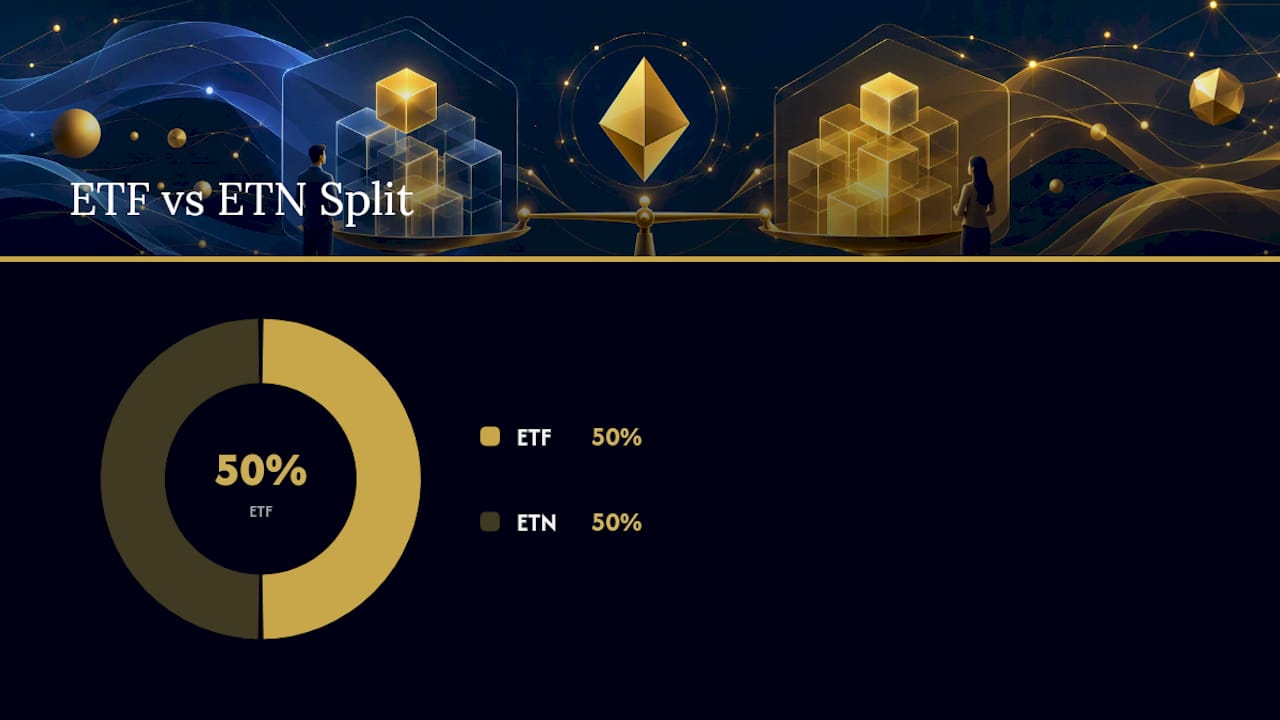
| Ticker | Leverage / Direction | Structure | Liquidity Note | Best Suited For |
|---|---|---|---|---|
| UGL (ProShares Ultra Gold) | 2x long | ETF | Moderate volume, tracks Bloomberg Gold Subindex | Short-term bullish trades |
| DGP (DB Gold Double Long ETN) | 2x long | ETN | Thinner volume; carries issuer credit risk | Tactical long exposure, credit-risk tolerant |
| GLL (ProShares UltraShort Gold) | -2x short | ETF | Moderate volume | Short-term bearish trades or hedges |
| DZZ (DB Gold Double Short ETN) | -2x short | ETN | Lower AUM; watch bid-ask spreads | Tactical hedging, credit-risk tolerant |
A structural note worth remembering: ETFs like UGL and GLL are registered funds holding futures and swaps directly, while ETNs like DGP and DZZ are debt notes issued by a bank, meaning your return depends partly on that bank's ability to pay. The UGL fund profile confirms the fund does not directly hold physical gold and relies on rolling COMEX futures contracts.
One historical footnote matters for anyone researching older articles: certain 3x leveraged gold ETNs were delisted, leaving 2x products as the practical ceiling for exchange-traded gold leverage in the U.S. market today.
Why Do Multi-Day Returns Diverge From the Daily Target?
The gap between a fund's daily target and its actual return over a week or a month comes down to volatility drag. OneGold's explanation of synthetic replication notes that daily rebalancing plus swap and roll costs cause performance decay the longer you hold.
Here's a simplified illustration. Say gold moves like this over four days: up 3%, down 3%, up 3%, down 3%. Choppier markets punish leveraged funds harder than trending ones, even when the net price change looks small.
The main risks stacking on top of that math:
- Amplified losses on adverse moves, proportional to the leverage factor.
- Volatility drag that erodes returns even in sideways markets.
- Expense ratios and roll/swap costs that quietly compound against you.
- Credit risk specific to ETN structures like DGP and DZZ.
- Low AUM or thin trading volume on some tickers, which widens spreads and slippage.
Statistic Callout: ProShares' own strategy documentation states that holding periods longer than one day can produce returns that deviate significantly from the daily 2x or -2x target, a warning built directly into the prospectus language.
Given all that, treat these funds as instruments you check daily, not as vehicles you set and forget.
How Do You Trade Gold Leverage Safely?
Turning the mechanics above into rules you can actually follow:
- Size positions to risk, not to excitement. A widely cited rule from gold trading leverage guides caps risk at 1 to 2% of account equity per trade, calculated from your stop-loss distance rather than your available margin.
- Set stops before you enter, based on gold's recent volatility range rather than a round number that feels comfortable.
- Keep a margin buffer well above the minimum. Maintaining higher margin levels reduces the odds of a forced liquidation during a sudden intraday spike.
- Check liquidity before entry, especially on ETNs like DGP or DZZ, where thin volume can widen your entry and exit costs.
Monitoring cadence matters as much as entry rules. Check 2x fund positions at least once daily; if you're trading gold via margin or futures directly, intraday monitoring becomes necessary, particularly around session overlaps and ahead of major economic releases that tend to whipsaw XAUUSD.
- Avoid holding leveraged positions through major central bank announcements unless the trade is specifically built around that event.
- Factor in overnight funding costs, which accumulate differently across ETFs, ETNs, margin accounts, and CFDs.
- Confirm your broker's margin call policy before you need it, not during a drawdown.
Pro Tip: A leverage-to-margin calculator can show you exactly how much notional gold exposure a given margin deposit controls, which makes position sizing far less guesswork and far more arithmetic.
For traders who want gold exposure without daily monitoring, automated copy trading offers a different path. Sonicaigold's approach lets an algorithm handle entries, exits, and risk parameters continuously, which removes the burden of checking positions every session.

What Alternatives Exist to Leveraged ETFs?
Leveraged ETFs and ETNs aren't the only route to amplified gold exposure. Direct futures contracts, CFDs, and standard brokerage margin accounts all offer leverage, each with its own tradeoffs.
- Futures with margin: highly efficient leverage, but requires managing contract expirations and margin calls directly.
- CFDs: flexible leverage settings, though some platforms offer fixed leverage as high as 500x on certain gold contracts, which raises liquidation risk sharply if misused.
- Brokerage margin positions: straightforward but exposes you to interest costs and maintenance margin rules that vary by broker.
- Managed or automated copy trading: shifts execution and monitoring to a system or team, trading some control for reduced day-to-day workload.
Sonicaigold's gold auto-copy strategy runs on the COPYX execution system, focuses exclusively on XAUUSD, and reports 18 consecutive winning months with an independently verified 80% win rate. Past performance never guarantees future results, but the track record gives investors a documented reference point rather than a marketing claim alone.
Leveraged gold products demand active attention by design. An algorithm-driven, professionally managed strategy exists precisely for traders who want gold exposure without becoming a full-time position monitor.
A Trader's Honest Take on Gold Leverage
Most losses I've seen traders describe with leveraged gold funds come from holding too long, not from picking the wrong direction. Respect the daily reset, or it will quietly work against you. For more on the author, see our gold trading strategy guide.
A Lower-Maintenance Path to Gold Exposure
Leveraged ETFs demand daily attention; Sonicaigold's auto-copy strategy is built for investors who want gold exposure without watching charts every session. It runs exclusively on XAUUSD through the COPYX execution system, copying trades from a professionally managed strategy directly into your account.

The appeal here isn't just automation. It's 18 consecutive months of independently verified performance and an 80% reported win rate, figures you can check yourself on Sonic AI's Myfxbook results page rather than take on faith. Past results never guarantee future ones, but a verified record beats a marketing promise every time.
If daily monitoring, stop-loss placement, and margin buffers described above sound like more manual work than you want, visit the gold copy trading page to see how account setup and trade copying work, and decide whether a managed approach fits your gold trading plan better than direct leverage.
Frequently Asked Questions About Gold Leverage
What is the best leverage for gold trading? There's no single best ratio. It depends on your account size, stop-loss distance, and risk tolerance. Practical guides on XAUUSD risk management suggest sizing leverage from your stop-loss distance rather than choosing a fixed multiple upfront.
Can leveraged gold ETFs lose money even if gold price doesn't change? Yes. Daily rebalancing and volatility drag can erode value in choppy, sideways markets, even when gold's price ends roughly where it started.
Is UGL or DGP better for leveraged gold exposure? UGL is an ETF holding futures and swaps directly, while DGP is an ETN carrying issuer credit risk. Investors uncomfortable with credit risk generally lean toward the ETF structure.
These products are built for short-term trades, typically days rather than weeks, given how compounding widens the gap from the daily target over time.
Is there a lower-effort alternative to trading leveraged gold ETFs directly? Automated copy trading, such as Sonicaigold's XAUUSD strategy, lets investors gain gold exposure through a managed algorithm instead of monitoring leveraged positions daily.
This article is general information, not a substitute for advice from a qualified financial advisor. Consult a qualified financial professional about your own circumstances before acting on anything here.
Sources
- ProShares Leveraged (2×) and Inverse (-2×) Gold ETFs
- 4 Leveraged Gold ETFs
- OneGold explanation of leveraged gold ETF mechanics