
Sonic AI is a managed gold copy-trading strategy, and the honest verdict is this: it holds up better than most auto-trading products because its results sit on a public, read-only ledger instead of marketing screenshots. Before you fund anything, three items matter more than any sales page: the MyFXBook read-only ledger, the claimed win rate and consecutive green months, and the COPYX-to-MT5 execution chain that actually places your trades.
- Check first: the live MyFXBook trade history, timestamps, and PnL
- Then verify: the stated win rate against the sample period it covers
- Then act: review the official Sonic AI page for onboarding steps before registering
Sonic AI markets a high win rate over multiple consecutive winning months, a figure worth treating as a starting claim to verify, not a guarantee, using the checklist below.
Key Takeaways
Sonic AI's legitimacy rests on a verifiable public ledger, not marketing copy, and readers who check that ledger before funding make far better-informed decisions.
| Point | Details |
|---|---|
| Verify before funding | Cross-check the win rate and green-month streak against the live MyFXBook ledger's timestamps and PnL. |
| Understand the execution chain | COPYX mirrors AI-generated signals into your MT5 account automatically once linked. |
| Leverage changes your risk | Higher leverage variants (12X, 24X) widen both potential gains and drawdown compared to lower tiers. |
| Opt-out is reversible anytime | Disabling the COPYX link stops new trades from copying, though open positions may remain until closed. |
| Sonicaigold provides the verified path | Sonicaigold's registration and live-proof pages let you confirm ledger data before committing capital. |
Verified Links and Primary Sources to Inspect
- MyFXBook read-only Sonic AI ledger
- Official Sonic AI product overview
- FSC Mauritius public entity register
- Sonic AI FAQ for supplemental questions
This article is general information, not a substitute for advice from a qualified financial advisor. Consult a qualified financial professional about your own circumstances before acting on anything here.
Table of Contents
- What Sonic AI Does and How It Executes Trades
- How Do You Verify Sonic AI's Performance Claims?
- How Do You Register and Link an MT5 Account?
- What Are the Fees and Real Risk Profile?
- What Proof Backs Sonic AI's Legitimacy Claims?
- Is Customer Support Actually Responsive?
- What Do Current Subscribers Say About Results?
- How Do You Stop Copying the Sonic AI Strategy?
- Is It Safe to Link Your MT5 Account?
- When Does Sonic AI Actually Make Sense?
- How Do You Get Started With Sonic AI Today?
- Sources
What Sonic AI Does and How It Executes Trades
Sonic AI trades a single instrument: gold, quoted as XAUUSD. That narrow focus is deliberate. Gold moves on a smaller set of drivers (real yields, dollar strength, geopolitical risk) than a multi-asset book, which makes an algorithmic approach easier to tune and easier for you to evaluate.
The execution path runs in three steps. The strategy generates a signal, COPYX replicates that trade into your linked account, and your MT5 terminal fills the order in real time, mirroring lot size proportionally to your account balance. You never place the trade yourself.
Leverage variants change the outcome meaningfully:
- Lower leverage tiers smooth the equity curve but cap upside
- Higher leverage tiers amplify both gains and drawdown
- Your MT5 account type and broker margin rules ultimately set what leverage is available to you
What stays in your hands: funding the account, choosing the MT5 account type, and monitoring open exposure. Sonic AI decides entries and exits; you decide how much capital sits behind them.
Pro Tip: Start with the lowest leverage variant available for at least one full monthly cycle before scaling up. Drawdown behavior at 24X can look completely different from the 12X curve you reviewed on MyFXBook.
How Do You Verify Sonic AI's Performance Claims?
Marketing pages can say almost anything. A public trade ledger cannot. Sonic AI's results live on a MyFXBook read-only account, and that page is where the real due diligence happens, not on the landing page copy.
Here is the sequence worth following before you trust any number:
- Open the MyFXBook link and confirm it's the read-only investor view, not a static screenshot embedded elsewhere.
- Check the sample period. A win rate calculated over three months means something different than one measured over 18.
- Cross-reference monthly returns against aggregated PnL. Consecutive green months should match the sum of individual trade outcomes, not a rounded marketing figure.
- Note the leverage used on the verified account, since a strategy tested at low leverage will show a different drawdown profile at higher settings.
- Count total trades. A handful of trades over a long window tells you far less than hundreds of trades with consistent sizing.
Watch for red flags common across the copy-trading space: edited or cropped screenshots, performance claims with no stated leverage, and short sample windows dressed up as long-term track records. The strongest signal isn't the win rate number itself. It's whether the timestamps, per-trade PnL, and monthly aggregates on the ledger all line up with each other, a verification habit worth building regardless of which strategy you're evaluating.
A quick independent-verification checklist: does the account show live (not demo) trading, is it updated continuously rather than in batches, and does the broker connection match what the Sonic AI results page describes?
How Do You Register and Link an MT5 Account?
Getting from "interested" to "copying trades" takes four stages, and most delays happen at the same two points: document verification and MT5 field entry.
- Create your account and complete KYC. You'll need a government ID and typically a proof-of-address document. Email verification follows immediately; document review is the step most likely to hold things up for a day or two.
- Fund the account. Card, crypto, and bank transfer are the usual options. Card and crypto tend to credit fastest; bank transfers can take longer depending on your institution. Check the MT5 setup page for current minimum deposit guidance before you fund.
- Link MT5 to COPYX. This means entering your MT5 account number, server, and password (or investor password, depending on the broker) into the COPYX interface so it can mirror trades. Getting the server name exactly right matters. A single typo here is the most common reason a linked account shows zero copied trades.
- Activate and test small. Apply any team or promo code at this stage. Then fund a modest amount first and confirm trades actually appear in your MT5 history before committing your full intended allocation.
Pro Tip: Take a screenshot of your MT5 server and login details the moment you receive them from your broker. COPYX linking fails more often from mistyped server names than from anything on the strategy side.
Onboarding videos walk through each screen if you'd rather watch than read, and they're worth the ten minutes before you touch real capital.
What Are the Fees and Real Risk Profile?
Sonic AI runs on a profit-share model rather than a flat subscription. The exact percentage split, along with any performance-fee thresholds, is listed on the Sonic AI review page, and you should confirm the current figure there rather than relying on a number you saw elsewhere, since these terms can change.
Beyond the profit share, two costs quietly erode net returns:
- Broker spreads and commissions on every XAUUSD trade, which add up faster on a high-frequency strategy than a low-frequency one
- Slippage during volatile sessions, particularly around major economic data releases when gold can gap several dollars in seconds
Drawdown is the number that separates a strategy you can hold through a rough month from one that triggers panic selling. Higher leverage variants widen the drawdown range you should expect, even when the underlying win rate stays constant, because the same losing streak simply costs more per point of adverse movement.
Sensible risk management here looks like: sizing your allocation as a percentage of total capital you could tolerate losing, checking the account weekly rather than hourly (daily equity swings are normal for a leveraged gold strategy), and setting a personal drawdown threshold at which you'll pause copying rather than waiting for the strategy to recover on its own.
What Proof Backs Sonic AI's Legitimacy Claims?
Publisher-supplied evidence is a starting point, not a verdict. Sonicaigold's own materials cite the 80% win rate and 18-month green streak, and those figures live alongside COPYX integration details on the official Sonic AI overview. Treat every number on that page as a claim to cross-check against the MyFXBook ledger, not as independently audited fact.
Genuine third-party verification documentation should show a few specific things: a broker-side confirmation that the account is live rather than simulated, a continuous (not periodically refreshed) feed of trade data, and consistency between the leverage disclosed on the ledger and the leverage marketed on the sales pages.
Full author credentials and independently sourced verification documents for this strategy are still being compiled and will be published here as they become available. Readers should treat any performance figure as provisional until they've confirmed it against the live ledger themselves.
Where jurisdictional clarity matters, a public regulator lookup, such as the FSC Mauritius online public register, lets you check whether a connected entity carries an active registration. Not every copy-trading arrangement requires this step, but it costs nothing to check.
Is Customer Support Actually Responsive?
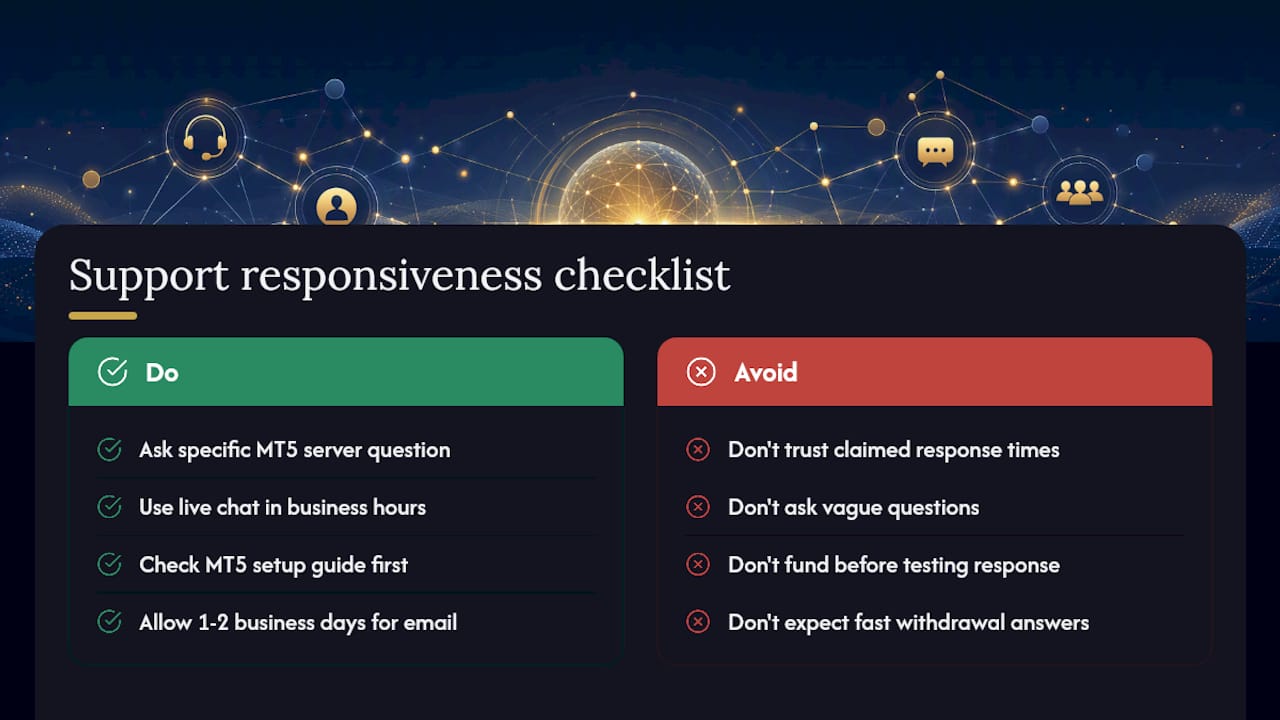
Support quality tends to separate legitimate copy-trading operations from the ones that vanish once your deposit clears. For a strategy that depends on precise MT5 linking, responsive support during onboarding matters more than it does for a simple app signup, because a wrong server field or a stuck KYC document can leave your account sitting idle for days.
Expect the fastest response through live chat or a dedicated support channel during standard business hours, with slower turnaround on weekends when trading volume in gold also thins out. Email tickets tend to get resolved within one to two business days for account and linking questions; anything involving fund withdrawal typically takes longer, since it often requires manual review on the broker side rather than the strategy provider's side.
The most useful test isn't reading support's own claims about response time. It's asking a specific technical question before you fund your account, something like confirming which MT5 server your broker uses with COPYX, and timing how long a clear, accurate answer takes to arrive. A vague or generic reply to a specific question is a weaker signal than a fast reply that actually addresses what you asked.
If you run into a linking issue after activation, the setup guide on the MT5 setup page covers the most common failure points, which resolves a meaningful share of support tickets before they need a human response at all.
What Do Current Subscribers Say About Results?
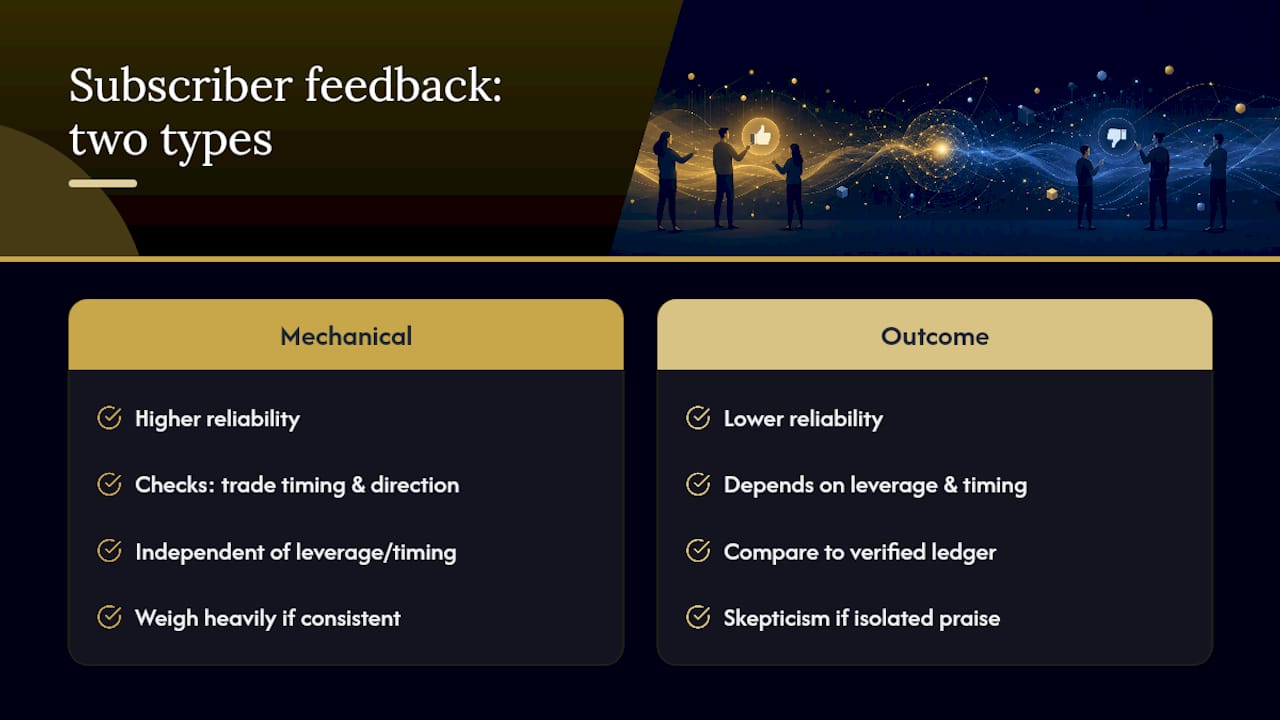
Subscriber feedback on any copy-trading strategy splits into two useful categories: comments about the mechanics (did trades copy correctly, was setup smooth) and comments about outcomes (did the account perform the way the ledger suggested it would). The mechanical feedback tends to be more reliable, since it doesn't depend on the reviewer's entry timing or risk settings.
Outcome-based testimonials deserve more skepticism. Two people copying the same strategy at different leverage settings, or during different weeks, can report very different personal results even when the underlying strategy performed identically on the public ledger. That's not a flaw unique to Sonic AI. It's a structural feature of copy trading generally: your account only reproduces the strategy's percentage moves, not its exact dollar history.
When you read subscriber comments anywhere online, weigh them against the verified numbers on MyFXBook rather than in place of them. A subscriber praising a strong month means little if that month happened to fall inside a documented drawdown period on the public ledger. Conversely, a complaint about a losing stretch is worth less alarm if the same stretch shows up as a normal, disclosed drawdown on the verified account history.
The most reliable pattern to look for across multiple independent comments, rather than any single review, is whether copied trades consistently matched the timing and direction shown on the public ledger. Consistency on that mechanical point is a stronger legitimacy signal than any praise about profits.
How Do You Stop Copying the Sonic AI Strategy?
Opting out is meant to be simpler than opting in, and for a COPYX-based setup, it generally is. You're not canceling a subscription buried in fine print. You're breaking a trade-replication link.
The straightforward path: log into the COPYX dashboard connected to your account and disable the copy link to the Sonic AI strategy. This stops new trades from mirroring into your MT5 account immediately, though any trades already open at the moment you disconnect will typically stay open until they hit their own stop-loss, take-profit, or manual close, since disabling the copy link doesn't force-close existing positions.
If you'd rather stop everything at once, closing open positions manually inside MT5 before disconnecting COPYX gives you a cleaner break, particularly useful if you're pausing due to a personal risk limit rather than a planned, gradual exit.
Withdrawal of remaining funds follows your broker's standard process rather than anything specific to Sonic AI, so processing time depends on your funding method and broker, not on the strategy provider.
One detail worth confirming before you ever fund an account: whether disconnecting from COPYX also affects any profit-share settlement still owed for trades already closed. That's a fair question to raise with support during onboarding, well before you need the answer in a hurry.
Is It Safe to Link Your MT5 Account?
Linking MT5 to a third-party copy system like COPYX means sharing account credentials, which makes it worth understanding exactly what gets shared and what doesn't. Most reputable copy-trading infrastructure uses an investor password rather than your master trading password, a distinction that matters because an investor password typically allows trade visibility and, in copy-trading contexts, trade replication, without granting withdrawal rights.
Confirm with your specific broker whether COPYX connects via investor password or full account credentials, since this varies by broker integration and changes your actual exposure if credentials were ever compromised.
Beyond the login itself, a few practical safeguards apply regardless of which copy-trading system you use:
- Use a unique password for your MT5 account rather than reusing one from another platform
- Enable two-factor authentication on your broker account if it's offered
- Review connected applications periodically and revoke access for anything you no longer use
Data privacy in this context mostly concerns what identity documents you submit during KYC and how long that data is retained. Reputable brokers disclose retention policies in their own terms, separate from anything Sonic AI or COPYX controls directly, so that documentation sits with your chosen broker rather than the strategy provider.
When Does Sonic AI Actually Make Sense?
Sonic AI fits an investor who wants gold exposure without watching charts all day, and who can genuinely tolerate drawdown without panic-closing positions at the worst possible moment. It doesn't fit someone who needs guaranteed liquidity next month or who's already leveraged elsewhere.
A workable rule: allocate only capital you could leave untouched for several months, check the account weekly rather than daily, and set a personal drawdown limit before you fund anything, not after a rough week tempts you to move the goalposts.
— Paulo
How Do You Get Started With Sonic AI Today?
Everything in this guide points toward one practical decision: verify first, fund second. Sonicaigold's advantage over chasing screenshots on social media is straightforward. Every performance claim here traces back to a public, read-only ledger you can check yourself before a single dollar leaves your account.

Before you register, gather three things: a government ID for KYC, your intended funding method (card, crypto, or bank transfer), and your broker's MT5 server details if you already have an account. Then start at the XAUUSD copy trading registration page, where you'll find the signup flow alongside links to the live proof pages. If you want to watch the setup happen before committing, the live demonstration page walks through onboarding videos in real time.
Whichever page you start on, open the MyFXBook read-only ledger one more time before you fund. Confirm the sample period, the leverage, and the trade count still match what this guide described. That five-minute check is the difference between an informed decision and a hopeful one.
Sources
- SONIC AI Forex Trading System by Forex Trader ... (MyFXBook)
- aitech — SONIC is aitech's #1 gold trading strategy
- FSC Mauritius online public register